What Is a Tron Tracker and Why Use One
A Tron tracker is a blockchain explorer that indexes all transactions, addresses, and smart contracts on the Tron network. Unlike centralized exchanges or wallets, a tracker gives you direct access to immutable ledger data. You can search by wallet address to see incoming and outgoing transfers, check token balances across multiple TRC20 contracts, and review transaction timestamps and gas fees. This is essential for verifying payments, auditing fund movements, and confirming that a wallet address is legitimate before sending funds. Businesses and individuals use trackers to maintain compliance records and detect suspicious activity patterns.
How Tron Address Tracking Works
The Tron network operates as a distributed ledger where every transaction is cryptographically signed and broadcast to thousands of nodes. A Tron wallet tracker aggregates this data by running full-node software that downloads and indexes the entire blockchain. When you search for an address, the tracker queries its database to retrieve all associated transactions, token transfers, and current balance. Each transaction is immutable and timestamped, so the history cannot be altered retroactively. The tracker also decodes smart contract interactions, showing which TRC20 tokens were transferred and in what quantities. This indexing happens continuously, so new transactions appear within seconds of confirmation.
Tron Transaction Tracker: Verifying TXID and Hash Lookups
Every transaction on Tron generates a unique transaction ID (TXID) or hash, a 64-character hexadecimal string that serves as a permanent receipt. A Tron transaction tracker lets you paste this hash to retrieve full details: sender and recipient addresses, amount transferred, gas fees, confirmation status, and timestamp. This is critical for resolving payment disputes, confirming that a transfer actually occurred, and checking whether a transaction succeeded or failed. If a transaction shows as pending, the tracker displays its position in the mempool. For rejected transactions, the tracker explains the failure reason, such as insufficient gas or contract error. Always verify the TXID before assuming a payment has been completed.
TRC20 Token Tracking and Balance Verification
TRC20 is the Tron standard for custom tokens, similar to ERC20 on Ethereum. A Tron TRC20 tracker allows you to monitor token transfers across any TRC20 contract, including USDT on Tron, which is one of the most widely tracked tokens. You can search a wallet address to see all TRC20 tokens it holds, their current balances, and the transaction history for each token. The tracker displays the token contract address, decimal precision, and total supply. This is especially important for USDT holders, as it confirms whether your stablecoin balance is accurate and shows the exact timestamp of each transfer. Token trackers also reveal if a token contract has been flagged or if transfers are restricted.
AML Risk Checking and Frozen Account Detection
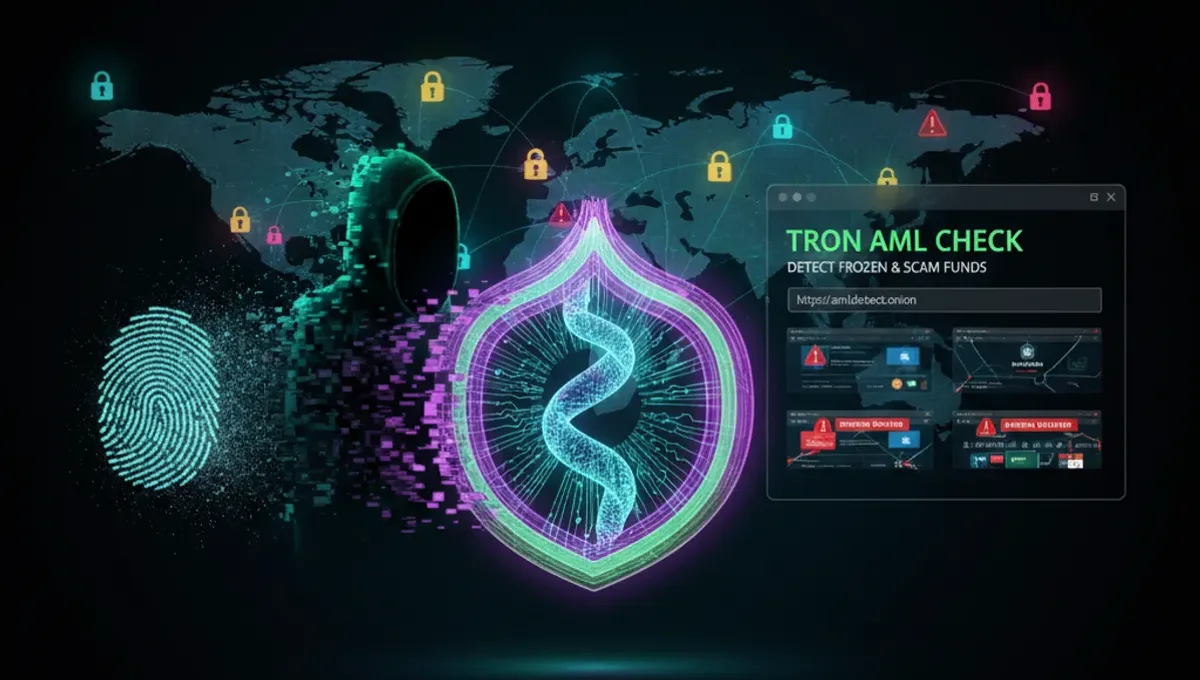
AML (Anti-Money Laundering) screening on a Tron tracker identifies addresses flagged by regulatory bodies, exchanges, or security firms as high-risk. A wallet may be flagged if it has received funds from known scams, ransomware operations, or sanctioned entities. Some trackers cross-reference addresses against public blacklists maintained by compliance providers. When you check a wallet, the tracker may display warnings such as 'frozen funds,' 'scam-associated,' or 'exchange-flagged.' This does not mean the address is illegal, but it signals that the wallet has been linked to suspicious activity. Before accepting a large transfer, always run an AML check to avoid receiving tainted funds, which could complicate your own compliance obligations.
Distinguishing Legitimate Trackers from Phishing Clones
Because blockchain trackers handle sensitive wallet information, phishing sites often mimic their appearance to steal private keys or seed phrases. A legitimate Tron tracker never asks for your private key, seed phrase, or password. Verify the domain name carefully: official trackers use consistent, recognizable URLs without misspellings or unusual subdomains. Check that the site uses HTTPS encryption (indicated by a padlock icon in your browser). Bookmark the official tracker URL so you do not accidentally visit a clone. If a tracker prompts you to connect a wallet or sign a transaction, be extremely cautious: legitimate trackers only display read-only data and do not require wallet connections. Cross-check critical information across multiple trackers before making financial decisions.
Common Mistakes When Using a Tron Tracker
One frequent error is confusing a wallet address with a contract address. Wallet addresses hold funds, while contract addresses represent smart contracts like token contracts. Sending funds to a contract address may result in permanent loss. Another mistake is assuming that a transaction shown on the tracker is final; always wait for full confirmation (typically 19 blocks on Tron) before considering a transfer complete. Users also sometimes misread gas fees or confuse TRX (Tron's native token) with TRC20 tokens. When checking balances, verify you are looking at the correct token contract address, as multiple contracts can exist for similarly named tokens. Finally, do not share your wallet address with untrusted sources just because it is public; phishers can use it to craft targeted scams.
Frequently asked questions
Can I use a Tron tracker without connecting my wallet?
Yes. A Tron tracker is a read-only blockchain explorer. You only need to enter a wallet address or transaction hash in the search bar. You never need to connect your wallet, provide private keys, or sign transactions. If a tracker asks for these, it is a phishing site.
How long does it take for a transaction to appear on a Tron tracker?
Tron transactions typically appear on the tracker within seconds of being broadcast to the network. Full confirmation usually takes 19 blocks, which is roughly 60 seconds. Pending transactions show immediately, so you can monitor progress in real time.
What does 'frozen' mean when checking a Tron address?
A frozen address flag indicates that the wallet has been flagged by an exchange, regulator, or security provider as associated with fraud, theft, or sanctions. Receiving funds from a frozen address does not make your wallet frozen, but it may trigger compliance reviews if you deposit those funds on an exchange.
Can I track USDT on Tron using a Tron tracker?
Yes. USDT on Tron is a TRC20 token, so any Tron tracker can display USDT balances and transfer history. Search the wallet address and filter for the USDT contract to see all USDT holdings and transactions for that address.
Is my wallet address visible to everyone on a Tron tracker?
Yes. All Tron addresses and transactions are public by design. The blockchain is transparent, so anyone can look up your address and see its balance and transaction history. This is why you should never share your private key or seed phrase, even though your address is public.